When We're Called to Keep Walking
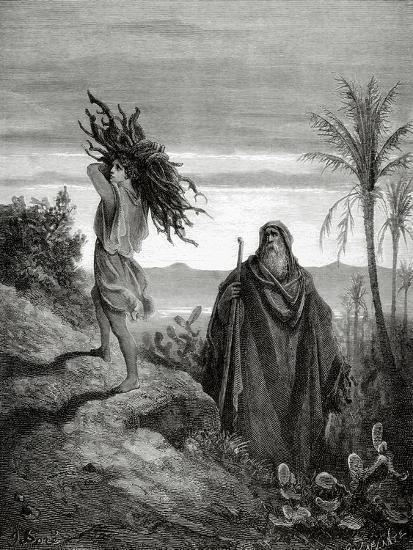
There’s something deeply uncomfortable about Abraham standing at the base of Mount Moriah with his son and a knife.
Not simply because God called him to sacrifice Isaac. That offends our modern sensibilities, but it wouldn’t have shocked Abraham’s world the way it shocks ours today.
What’s truly uncomfortable is this…
from a human perspective,
it looks like God is breaking His promise.
Isaac was the impossible child, born to a couple long past hope. Every promise God had made to Abraham was bound up in this boy. And now God was asking him to place that promise on an altar and raise the knife.
How do you hold “God promised Isaac would live” in one hand
and “God commanded me to sacrifice Isaac” in the other
without your faith splitting in two?
That’s where most believers live.
Not on a literal mountain with a literal knife,
but in the tension between what God has promised
and what He’s currently asking of us.
Maybe God has promised to work all things for good,
but obedience right now looks like forgiving someone who shattered you.
Maybe He’s promised to provide,
but following Him means releasing security you can see.
Maybe He’s promised that your prodigal won’t ultimately be lost,
but today you’re laying down expectations you can’t control.
The cost of obedience isn’t always measured by what we give up.
Sometimes it’s measured by what we’re asked to trust God with
when every instinct screams to hold on tighter.
What strikes me most about Abraham isn’t that the command made sense.
It’s that he kept walking anyway.
Honestly, I don’t know if my faith is that strong.
I know how quickly my confidence in God’s goodness would melt on that mountain.
Hebrews tells us Abraham reasoned that God could raise Isaac from the dead—not because he’d seen resurrection, but because he’d seen enough of God’s character to believe that faithfulness and impossibility aren’t contradictions in God’s hands.
That kind of faith doesn’t wait for the tension to resolve before it obeys.
It obeys into the tension, trusting God’s character more than its own clarity.
Bryan Chapell captures the heart of this when he says, “God does not intend for us to predict outcomes as much as He intends for us to trust Him in all circumstances.”
And here’s what I keep coming back to.
God stopped Abraham’s hand.
He provided a ram.
But centuries later, on that same mountain range,
when God brought His own Son,
there was no ram.
The knife wasn’t stayed.
Jesus bore what Abraham was spared.
So when God asks us to trust Him with something that feels unbearable,
He’s not asking us to do what He was unwilling to do Himself.
He’s asking us to believe
that the same love that didn’t spare His Son
will never withhold what we truly need.
The God who paid that price
can be trusted with whatever He’s asking you to lay on the altar today.
Father, some of us are standing at the base of a mountain today, carrying something we love deeply and don’t understand at all. Teach us to trust You…not because the path is clear, but because Your character is sure. Give us faith to walk forward when obedience feels costly, and grace to believe that You are always more faithful than we can see.
Recent
Why We Celebrate the Lord's Supper and Baptism...and Why it Matters
October 20th, 2026
A Problem With Grace
September 5th, 2026
The God Who Sings Over Us
August 13th, 2026
Finding Your Identity When Life Changes Around You
August 11th, 2026
7 Tips for Getting More out of Sunday Sermons
July 27th, 2026
Archive
2026
January
February
March
April
May
July
September
No Comments